
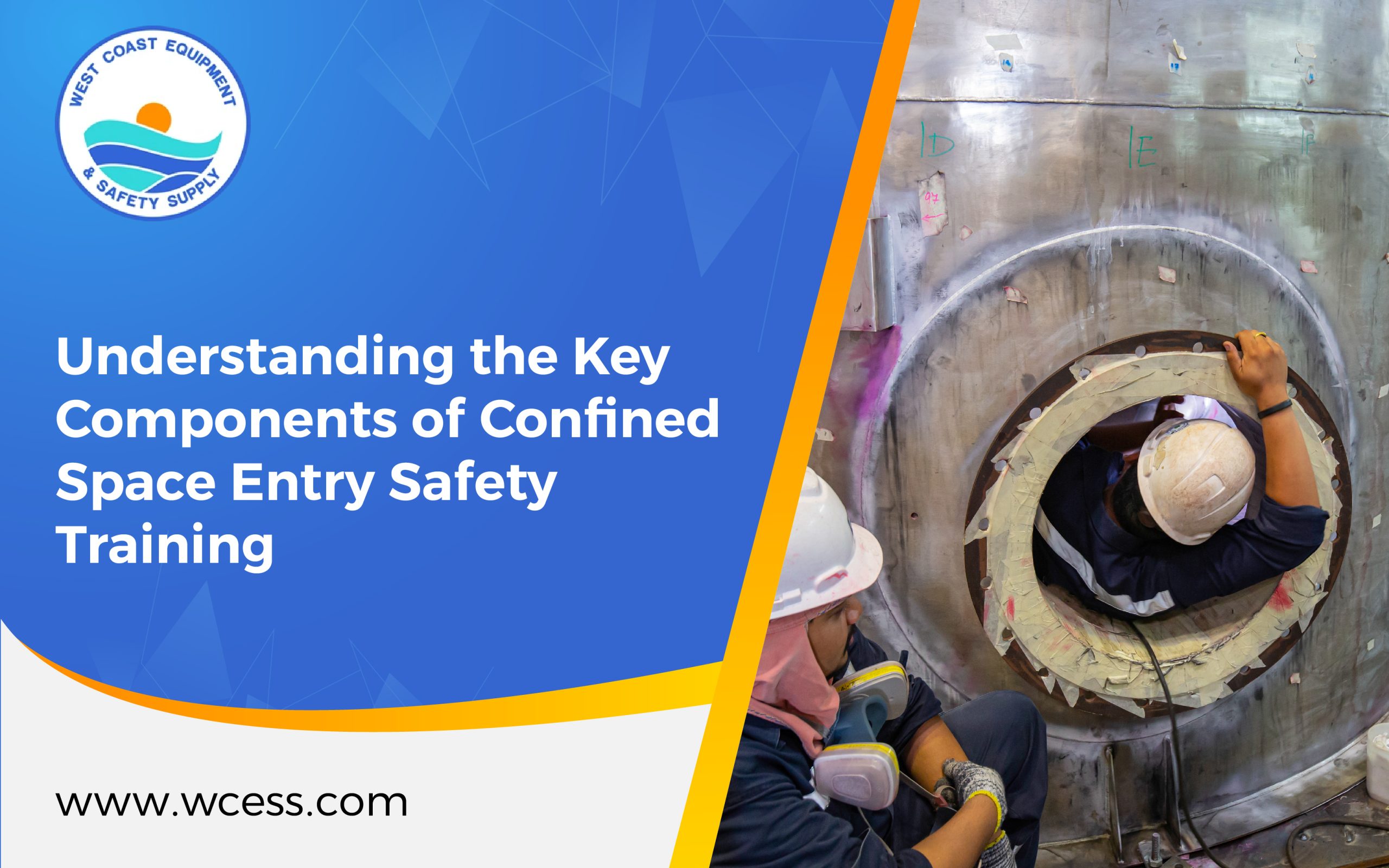
Confined spaces are not hostile by intent; they are simply indifferent. Danger does not announce itself. It waits for the moment you drop your guard, often resulting in devastating consequences. Confined space entry training exists to prevent the preventable, equipping the worker with a fighting chance in the event of catastrophic failure.
When working inside tanks, pits, silos, vaults, sewers, ducts, boilers, and confined enclosures, this training becomes a matter of survival. It’s a system of discipline that integrates hazard recognition, procedural control, equipment competence, communication, and emergency readiness.
Confined Space Safety Basics
Training begins by developing a proper understanding of the work environment and associated dangers. The trainee needs to understand that they’ll be working in a space not designed for continuous human occupancy and limited or restricted means of entry and exit.
From there, the safety training distinguishes the two types of confined spaces:
- Non-permit confined spaces don’t contain hazards that can cause serious harm.
- Permit-required confined spaces are typically characterized by engulfment risks, hazardous environments, inwardly converging walls, and other safety risks.
Understanding this distinction will form the basis of everything that follows. A competent safety practitioner will emphasize that this classification is dynamic and may change as conditions evolve.
Hazard Recognition
Confined spaces are extremely dangerous because conditions are sensory-neutral. That means danger is almost always colorless, odorless, and fast-acting. Worker safety training emphasizes hazard detection in five categories:
Atmosphere
- Oxygen deficiency (lower than 19.5%)
- Oxygen enrichment (greater than 23.5%)
- Toxic gases
- Flammable atmosphere.
Physical Hazards
- Mechanical equipment
- Electrical energy
- Moving parts
- Heat stress or cold exposure
- Noise and vibration
Engulfment Risks
Liquids, grains, powders, sludges, or flowable solids present within the confined space can trap or suffocate a worker.
Configuration Risks
- Sloping floors
- Tapered walls
- Internal structures that impede movement or rescue
External Hazards
- Traffic
- Adjacent processes
- Weather
- Simultaneous operations
A well-structured safety training program will include case studies of real accidents to help trainees fully grasp the risks. The purpose of this module is to demonstrate how overlooked hazards cascade into fatalities.
Safety as a Team Effort
Workplace safety is a team operation. Confined space safety training defines the roles and responsibilities of each worker to keep them from overlapping, causing confusion, and leading to latent failures.
Authorized Entrant
A worker who has mastered hazard recognition and symptoms of exposure. They use required protective equipment correctly and maintain communications with an attendant. If safety conditions change, the authorized entrant exits the space immediately.
Attendant
The attendant remains outside the confined space at all times. This worker remains vigilant, continuously monitoring the entry point and conditions. During an emergency, the attendant initiates safety protocol without entering the confined space.
Entry Supervisor
As the entry supervisor, the worker authorized entry and terminated it when worker safety conditions changed. They verify hazards and ensure the conditions are accurately distinguished, while ensuring emergency services are available and effective.
Confined space entry training emphasizes role discipline. This distinction ensures that every play is in the right place during an emergency. The attendant does not enter the confined space, the supervisor does not multitask, and the entrant does not self-regulate.
Turn Compliance Into Competence
Safety training is about establishing a life-critical operating culture to counter the unavoidable hazards in a hostile work environment. Each component of worker safety training exists to prevent mistakes, where errors can often mean certain death.
When the training is thorough, structured, and all-encompassing, confined spaces become managed risks rather than death traps. If any component is ignored, the margin of error vanishes, leaving no room for second chances.
Conclusion
Confined space safety is not about luck-it’s about discipline, awareness, and preparation. When training is thorough and roles are respected, hidden dangers become controlled risks rather than fatal surprises.
At West Coast Equipment & Safety Supply, we deliver confined space entry training grounded in real-world hazards and real workplace demands. Because when safety is treated as a skill, not a formality, workers are prepared to come home safely-every time.
Also Read: How to Choose the Right Confined Space Entry Training Provider?