

Fall protection inspection is the last line of defense against serious injury and even death from a preventable fall in the workplace. If you have never actively participated in your employees’ tasks, consider giving it a try. You will see the fall hazards present or likely to be present.
Your workers explore this setting every day, allowing you to see things from their perspective as they work to make the workplace a safe environment. Fall protection inspectors understand not just what to look for, but can help you meet OSHA/ANSI standards and industry-specific requirements. Here’s how all these tie into keeping your workplace efficient and productive.
What is Fall Protection Inspection?
Fall protection is an essential safety requirement in any workplace where there’s an ever-present risk of a worker falling from one level to another. It’s not just a construction work issue.
The risk of falling is present in many other industries, including:
- Construction: Such as roof construction, formwork, rebar work, and working from a ladder.
- General Industry: Warehouses, factories, and industrial plants where working on elevated machinery is the norm.
- Oil, Gas, and Mining: Rig work, accessing pipelines, and entering underground shafts are fall hazards.
- Telecommunications and Utilities: Maintaining cell towers, transmission poles, electrical lines, and wind turbine maintenance.
- Transportation and Logistics: Loading or unloading goods, maintaining vehicles, aircraft, and vessels.
- Facility Maintenance: Cleaning and maintaining the facility space and façade, servicing HVAC systems, and maintaining skylights and gutters.
- Public Spaces and Events: Rigging event stages, installing lighting, tent assembly, and setting up theater sets.
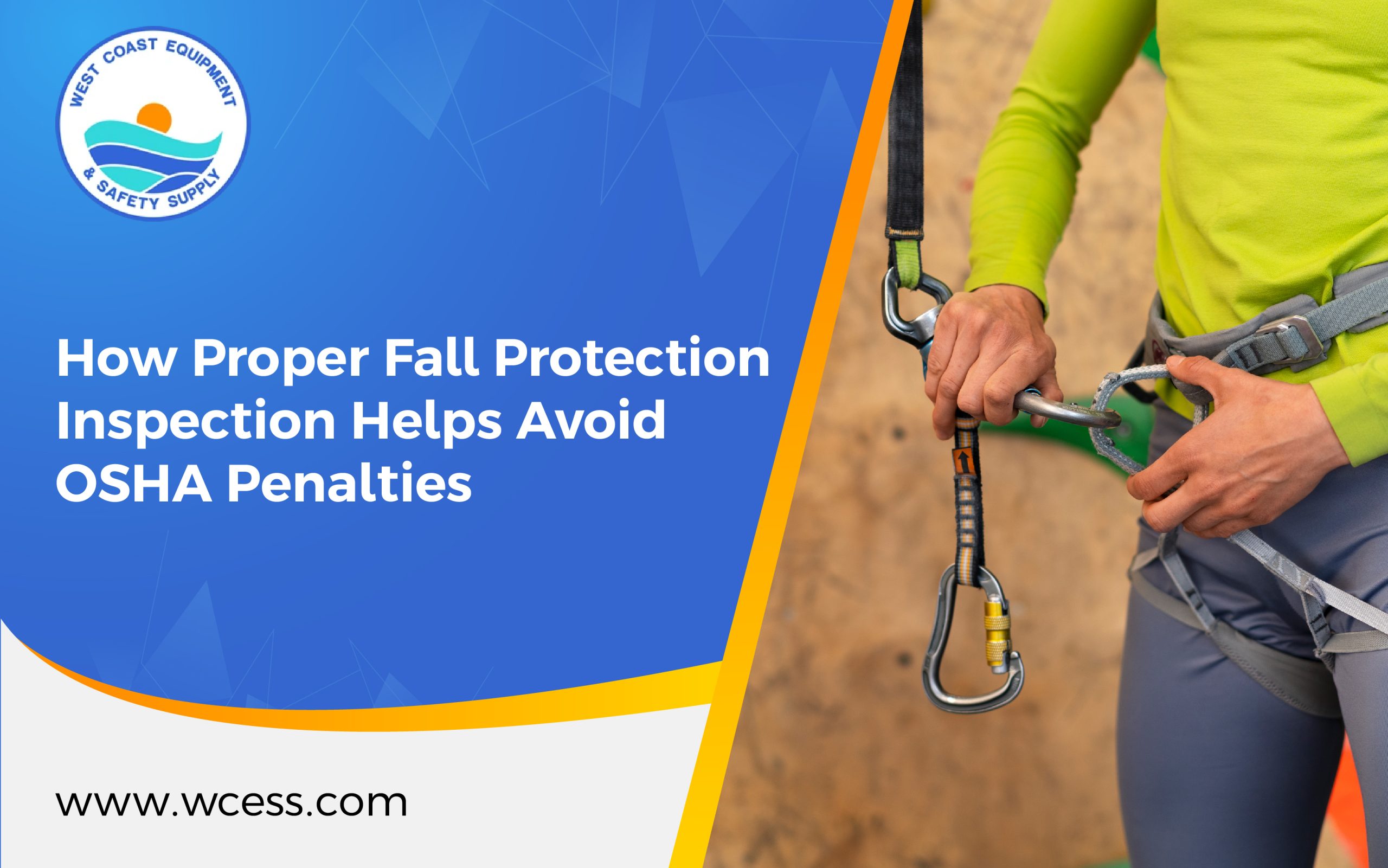
A worker working from 4 feet and higher, 6 feet in the construction industry, 10 feet on a scaffold, or 24 feet on a ladder, should use fall protection gear. That includes harnesses, lanyards, anchors, lifelines, and connectors.
Types of Fall Protection Inspections
Workplace fall safety inspection should be carried out by a trained and designated safety professional. Beyond working with a licensed inspector, this establishes a relationship with a safety partner who will help you develop a comprehensive fall protection plan.
Several types of fall protection inspections range from foundation to advanced care:
- Pre-use inspection – A quick fall protection inspection done in-house before the start of each shift.
- Competent person inspection – It focuses on assessing fall protection measures set up by a business. A trained safety professional will conduct this inspection every six months, as per ANSI/OSHA regulations, or more frequently in harsh environments.
- Annual inspection / documented inspection – A comprehensive inspection done to check for compliance, carried out by regulators. Everything is recorded and filed for action.
The goal is to keep everything in top shape, ensuring everyone ends each shift intact. An inspector will inspect body harnesses, lanyards, shock absorbers, self-retracing lines, and anchor points for defects and weakness.
Why is Fall Protection Crucial?
1. Preventing Fall
Hazards are not always that obvious. A professional knows how to test, measure, and verify equipment that saves lives and prevents injury. It identifies potential risks and ensures the workspace is safe for all occupants.
2. Legal Compliance
OSHA, ANSI, and other regulatory bodies have established legal requirements that compel businesses to adhere to safety standards. Failure to comply with these laws can result in substantial fines, lawsuits, or even a complete shutdown.
3. Boosting Morale
True confidence means trusting that the training, equipment, PPE, and response measures are practical and readily available. This level of care makes them feel valued and promotes productivity.
4. Saving Money
Injuries are costly. Investing in reliable fall protection systems can save a business from an endless loop of expensive medical bills and injury compensation. Additionally, the cost of replacing or repairing damaged equipment increases the overall expense.
5. Building a Safety Culture
Workers can see when employers invest in their safety. Regularly inspecting the fall protection system promotes a culture of safety. Implementing fall protection inspection before each shift promotes a safety-first culture, where everyone feels safer and valued.
Final Word
Fall protection inspection is essential because prevention is cheaper than reaction. Beyond the legal requirements and cost of an injury, it is the right thing to do. A solid safety record keeps the business running smoothly and productively.
At West Coast Equipment & Safety Supply, we provide workplace safety compliance training and equipment to promote a safer and more educated workforce actively. Learn more today!
Also Read: How Fall Protection Inspections Help Prevent Serious Injuries?